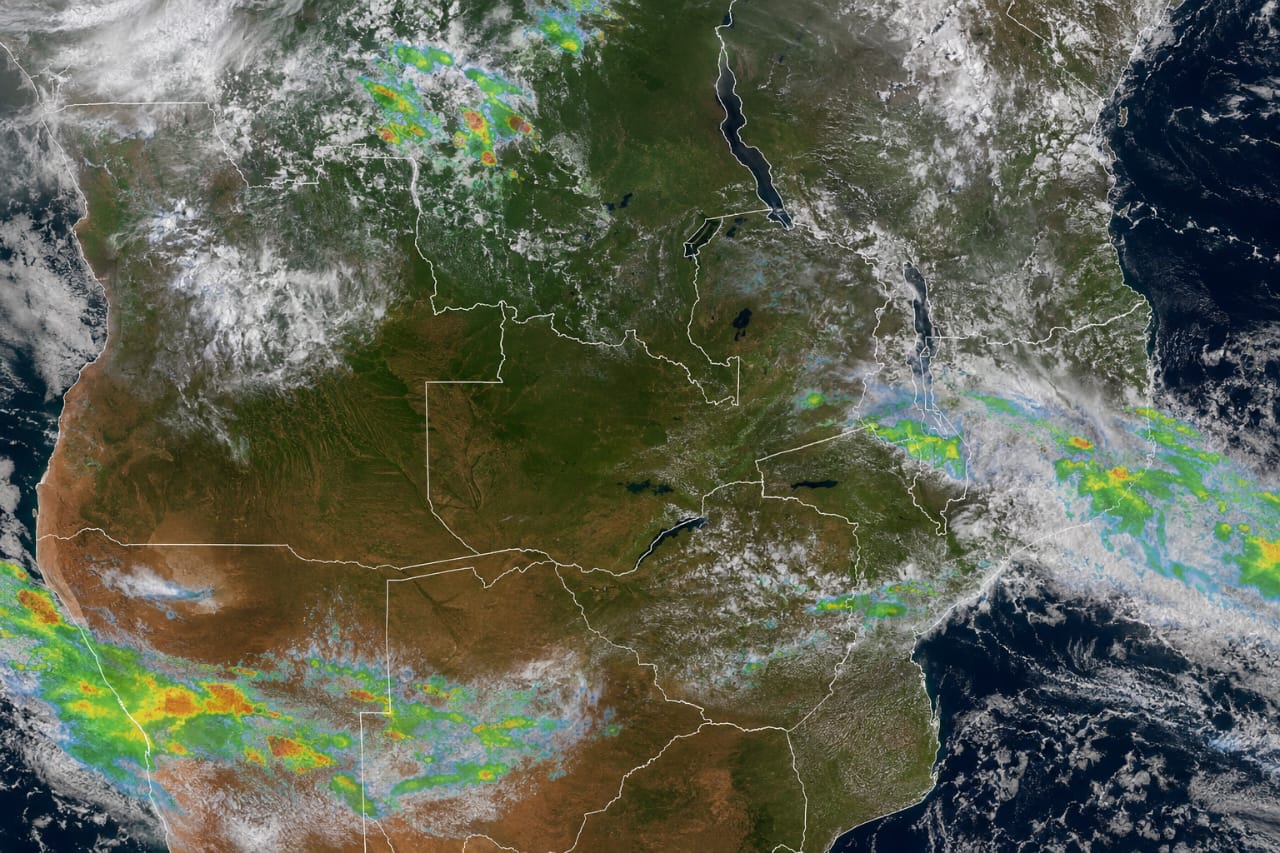
Every year, Zambia releases a seasonal rainfall forecast. Many farmers hear “normal to above-normal rainfall” and either assume it’s going to be a wet year or ignore the forecast completely.
Both reactions miss the point.
A seasonal forecast cannot tell you when it will rain. It estimates whether the season is more likely to be wetter, drier, or close to the long-term average. Used properly, it helps you decide when to plant, which varieties to choose, and how much risk to take. Here’s how to read it.
Where the Forecast Comes From
Zambia’s seasonal outlook is not produced in isolation. Each September, climate scientists from across southern Africa meet at the Southern Africa Regional Climate Outlook Forum, known as SARCOF, to agree on a regional consensus forecast. SARCOF combines forecasts from national meteorological agencies across the region with models from leading international climate centres before each country produces its own national outlook.
ZMD takes that regional consensus, downscales it to Zambia, and presents it publicly, often through a ministerial statement in Parliament. For the 2025/2026 season, government pointed to normal to above-normal rainfall, driven by a developing La Niña and favourable moisture from the Indian Ocean, with the season expected to peak between December and February.
That last detail matters more than the headline. A forecast broken into phases or months is far more useful than one blanket statement for the whole season.
What “60% Chance of Above-Normal Rainfall” Really Means
Seasonal forecasts speak in probabilities across three categories, called terciles, measured against a 30-year historical baseline.
| Forecast says | It actually means |
|---|---|
| Above-normal rainfall (wettest third of historical seasons) | Wet conditions are more likely than usual, but not guaranteed |
| Normal rainfall (middle third) | Conditions are expected to be close to the long-term average |
| Below-normal rainfall (driest third) | Drier conditions are more likely, but rain can still occur |
A “60 percent chance of above-normal rainfall” means six out of ten comparable past seasons leaned wet. A 40 percent chance still exists that your season falls in the normal or below-normal range. Farmers who treat the forecast as certainty and over-invest in a single scenario are taking on risk the forecast never promised to remove.
Forecasts are usually issued for overlapping three-month windows, for example October-November-December or November-December-January, rather than one block for the whole season. Check the window that applies to your planting decision, not just the season-long summary.
Why El Niño and La Niña Drive the Forecast
The biggest driver behind these outlooks is the state of the El Niño Southern Oscillation in the Pacific. El Niño is associated with drought conditions across the region. La Niña tends to bring heavier rains. When ZMD or SARCOF mentions a developing La Niña, that is the signal behind an above-normal outlook. When they mention El Niño, expect a drier lean, and plan accordingly.
The Indian Ocean Dipole is the second driver worth tracking, since it modifies moisture inflow from the east. Both indices get mentioned in SARCOF statements. Watching whether they are reported as strengthening or weakening through the season gives you an early read on whether the original forecast is holding.
You might also like: High Drought Risk Forecasted in the 2026/2027 Farming Season
How Farmers Can Turn the Forecast into Better Planting Decisions
Before planting, ask yourself:
- Which rainfall outlook applies to my district, not just the national headline?
- Which three-month period matters most for my crop’s critical growth stage?
- How confident is this forecast, and is the ENSO driver behind it well established or still developing?
- Do conditions call for a shorter-season, drought-tolerant variety, or is drainage on low-lying plots the bigger concern?
- What is my backup plan if the season shifts partway through?
A few concrete examples. If above-normal rainfall is favoured with peak rains expected December through February, that supports early to mid-November planting for most maize varieties, so flowering lands inside the wettest window rather than ahead of it. If below-normal rainfall is favoured, lean toward early-maturing varieties and wait to confirm rains have properly established before planting, to avoid a false start followed by a dry spell.
The planning timeline:
September: Seasonal forecast released October: Choose varieties and inputs based on the outlook November: Plant within your chosen window December to February: Monitor forecast updates and adjust
ZMD issues rolling updates through the season, not just the pre-season statement. A season that starts on an above-normal forecast can still see a mid-season dry spell. Checking once in September and never again throws away half the forecast’s value.
Common Mistakes Farmers Make With Seasonal Forecasts
- Assuming the forecast predicts rainfall on a specific day
- Reading only the national headline instead of the district-level outlook
- Ignoring forecast updates after planting is done
- Planting the same way every year regardless of what the forecast says
- Treating probabilities as guarantees
A Practical Starting Point
Zambia has invested in getting this information to farmers directly, including over 200 automatic weather stations, 300 agricultural rainfall stations, and more than 600 trained extension officers carrying weather information to smallholder farmers. The forecast is increasingly available through extension officers, community radio, and SMS alerts, not just national news. If you are not yet connected to that information chain through your local extension office, that is a lower-effort first step than interpreting SARCOF documents yourself every September.
The forecast is a probability tool, not a promise. Farmers who plan input purchases, variety selection, and planting windows around the tercile it favours, while keeping a fallback plan for the tercile it does not, get more out of it than farmers who either ignore it or treat it as gospel.
Make Better Planting Decisions This Season
A seasonal rainfall forecast is only valuable if you turn it into action. Once you’ve identified the likely rainfall pattern, you still need to decide when to plant, schedule field operations, manage labour, and stay on top of critical tasks throughout the season.
The Farm Operations Management Toolkit helps you put those decisions into practice with practical templates for planning, scheduling, and managing your farm activities from land preparation to harvest. Instead of reacting to the season, you’ll have a clear operational plan that keeps your farm on track.