

Starting a farm is a dream for many people in Zambia. Some want to grow crops for income, others want to produce food for their families, while some see agriculture as a business opportunity. However, successful farming requires more than just finding land and planting seeds. A farm is a business that requires planning, investment, management, and patience. Before starting, a beginner farmer needs to understand what they want to produce, who will buy it, and whether the numbers make sense.
1. Your Location Matters
Zambia has three agro-ecological regions, and where your land sits changes almost every decision you will make. Region I in the south gets the least rainfall and suits drought-tolerant crops and livestock. Region II, covering the central plateau, is Zambia’s main farming belt with moderate rainfall and good soils for maize, soya, and tobacco. Region III in the north gets the highest rainfall and suits crops like cassava, rice, and coffee. Before you plant anything, know which region you are farming in and what actually grows there.
2. Register the Business Properly
A farm is a business, and it needs the same paperwork as any other. Register with PACRA if you are operating as a company or sole proprietor, get a Taxpayer Identification Number from ZRA, and register with NAPSA if you plan to hire workers. If you qualify for the Farmer Input Support Programme, register early through your local agricultural camp officer, since FISP allocations are seasonal and slots are limited.
3. Understand Your Land and Water
Soil fertility, drainage, and water access vary even within the same district. Get your soil tested before your first season if you can, through the Ministry of Agriculture’s local office or a private lab. If you do not have access to a river or dam, look into a borehole or dambo cultivation, both common in Zambian smallholder farming, and budget for the cost of getting water to your field.
4. Choose a Crop Based on Your Region and Market, Not Trends
Maize dominates Zambian farming because of FISP support and the guaranteed FRA buying floor, but that does not make it the mĥost profitable option for you. Soya, groundnuts, and onions often carry better margins for farmers close to urban markets or the Kasumbalesa and Nakonde border corridors. Match your crop to your region’s rainfall and your access to a buyer, not to what your neighbour planted.
5. Budget in Kwacha, Realistically
A full budget covers land preparation, seed, fertiliser, chemicals, labour, transport to market, storage, and packaging. Add a buffer for the two things that hit Zambian farmers hardest. Input prices swing between planting and harvest, and rainfall variability means a delayed or short rainy season can cut yields even with good management.
6. Start Small in Your First Season
Treat your first season as a test run on a small area you can manage well, rather than a large area you can only manage poorly. Keep notes on what worked, what failed, and what you would change. Farmers who start small and reinvest steadily tend to outlast the ones who expand in year one.
7. Know Your Buyer Before You Plant
Decide where your harvest is going before the seed goes into the ground. That might be the FRA for maize, a local trader, a processor, or cross-border trade through Kasumbalesa or Nakonde into the DRC. Each buyer has different quality, quantity, and timing requirements, and knowing them in advance shapes how you farm the whole season.
8. Keep Records From Day One
Track your spending, your production, and your sales from the first day, not the first loan application. Records are what let you tell, season to season, whether the farm is actually making money.
9. Build the Business Alongside the Crop
Long-term success in Zambian farming comes from combining practical knowledge of your land with financial planning and market awareness. You do not need everything figured out before you start. You need a plan, a budget, and a system for recording what happens, so each season is better informed than the last.
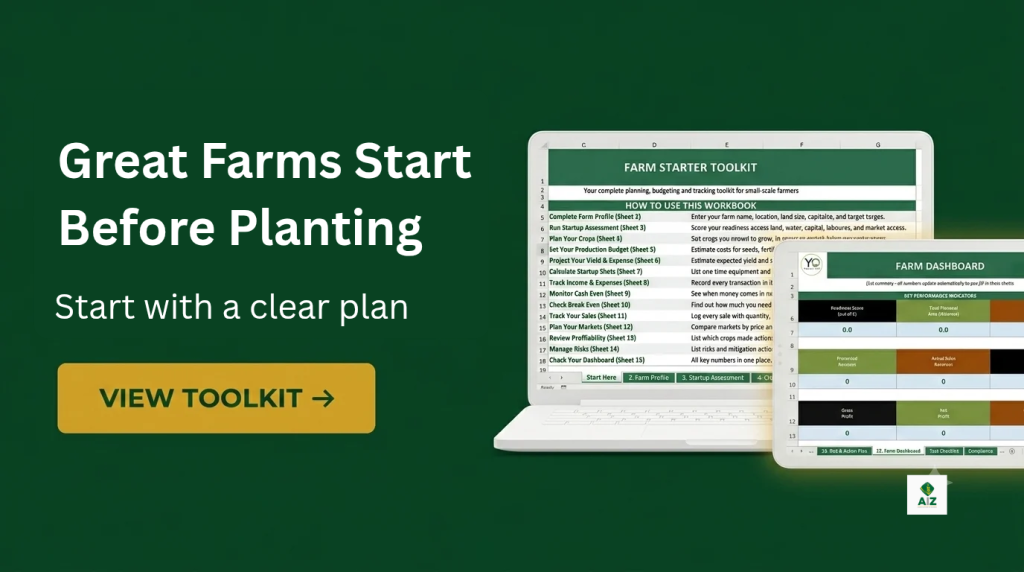
The Farm Business Starter Toolkit gives you the planning, budgeting, and record-keeping tools built for exactly this, so your farm starts as a business from day one.