
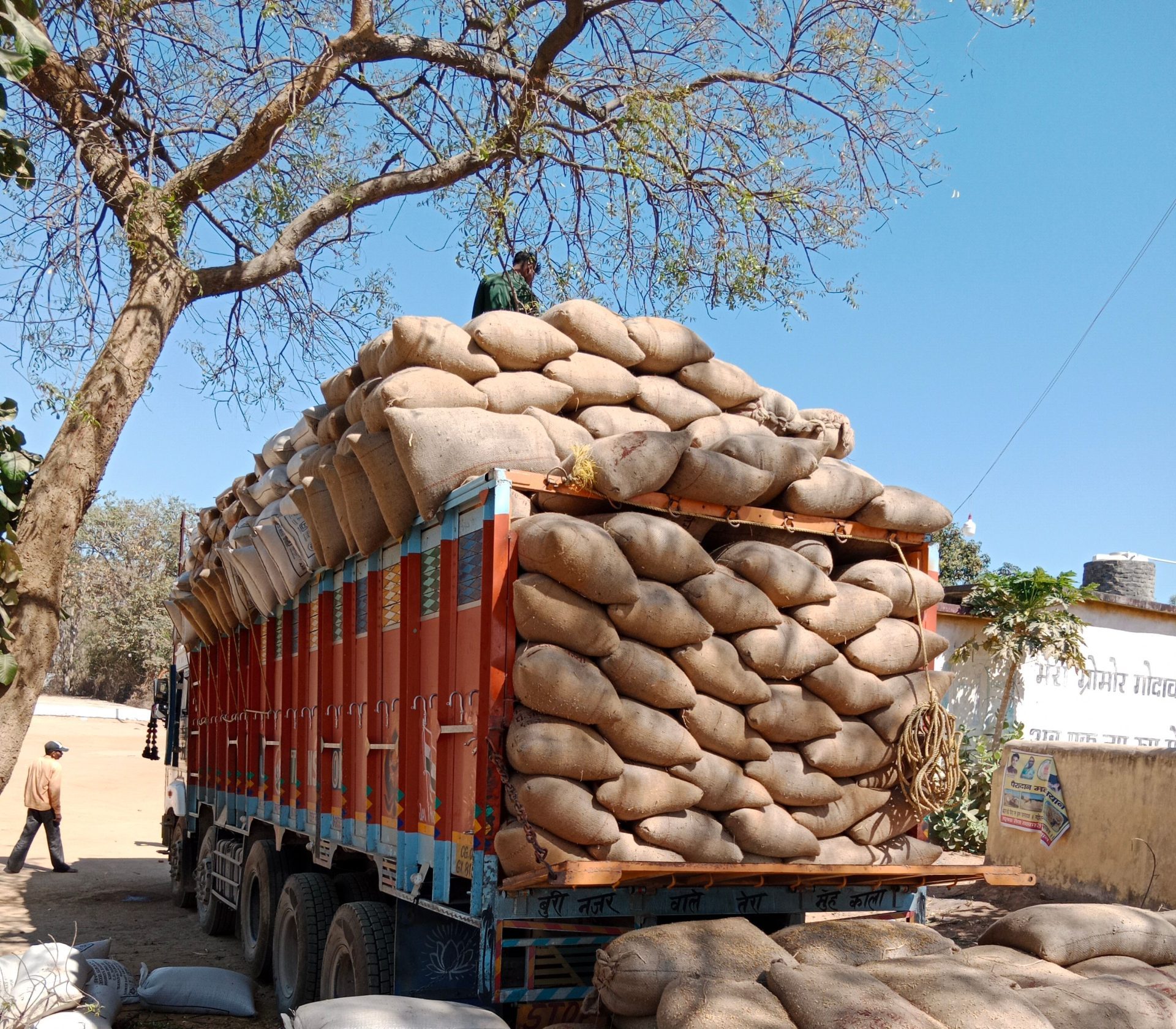
The 2025/2026 Crop Forecasting Survey projects Zambia’s maize production at approximately 4.94 million metric tonnes, the highest in the country’s history. This represents an increase of about 27.8% compared to last season’s estimated 3.9 million tonnes.
In purely production terms, this is a major achievement. It signals strong recovery from previous climate shocks and reflects improved input distribution, favourable rainfall in key production zones, and sustained farmer participation under national agricultural support programmes. However, beneath this production success lies the rising cost of moving grain through the system.
Why a record harvest is not enough
With national maize output now exceeding the estimated domestic requirement of around 4.2 million tonnes, Zambia is entering a surplus position. In theory, this should place downward pressure on maize and mealie meal prices, improving food affordability for consumers.
That price adjustment is already beginning to appear in grain markets, but it’s not uniform or frictionless. At the same time that supply is expanding, the cost structure of the agricultural value chain remains elevated, particularly due to fuel.
Diesel prices have remained above the K30 per litre threshold, with recent levels reported around the low K32 range. While there have been minor adjustments during the year, the overall cost environment remains high compared to recent historical averages. This creates a structural tension:
- More maize in the system reduces grain prices
- Higher fuel costs increase the cost of moving and processing that grain
The result is a squeeze on margins rather than a simple transfer of benefits to consumers.
Fuel costs are changing Zambia’s food systems
Fuel is not a marginal input in Zambia’s agricultural economy. It sits at the centre of logistics. It determines the cost of:
- transporting maize from farm to depot
- bulk movement to milling facilities
- distribution of mealie meal to urban and rural markets
- aggregation and cross-border trade flows
Even when farm-level prices decline due to surplus conditions, transport costs can prevent full transmission of those lower prices to end consumers. In practical terms, the system becomes less about how much maize is produced, and more about how efficiently it can be moved.
Some farmers are hit harder than others
The impact of this cost structure is not uniform. High-production rural districts like those far from major consumption centres and trunk roads face the highest effective cost burden. In these areas, long distances increase transport costs which reduce the price farmers receive at the farm-gate.
Traders and aggregators tend to respond to these costs by prioritising:
- farms closer to main roads
- consolidated bulk buying points
- routes with lower fuel intensity per tonne
This creates uneven market access, where location increasingly influences the price farmers receive, independent of yield or quality.
How regional trade is affected by transport costs
Zambia’s surplus position also places it within a competitive regional grain market. Neighbouring countries with deficits are strong markets for Zambian maize exports. However, competitiveness is not determined by production alone. It is shaped by landed cost, the total cost of moving maize from farm areas to border markets and beyond.
High internal transport costs reduce the margin available for exporters and can weaken Zambia’s competitiveness in regional trade flows.
How the system is adjusting and adapting
These conditions are already driving changes across the agricultural value chain. Several responses are emerging:
- Farmers are pooling harvests through cooperatives to reduce transport costs per bag
- Bulk transport contracts are being used to improve efficiency and lower logistics costs per load
- There is growing interest in local processing to reduce the need to move raw grain over long distances
- More farmers are focusing on storage so they can avoid selling during peak supply periods
These are not short-term fixes, but structural adjustments to a system operating under higher energy costs.
Conclusion
Zambia has produced a record maize harvest, and that shows strong farming capacity and resilience across the country. But growing more maize on its own is not enough to guarantee better income for farmers or lower prices for consumers. This season, the main challenge is no longer production. It is getting the maize from the field to the market at a reasonable cost.
We now have a situation where there is plenty of maize in the country, but diesel is expensive.
That combination affects everything, the price farmers receive at the farm gate, the cost of transport, and the final price of mealie meal in the shops. So the real question is no longer just how much maize Zambia produces. It is how efficiently that maize can be moved, stored, and sold in a system where fuel costs are high.