
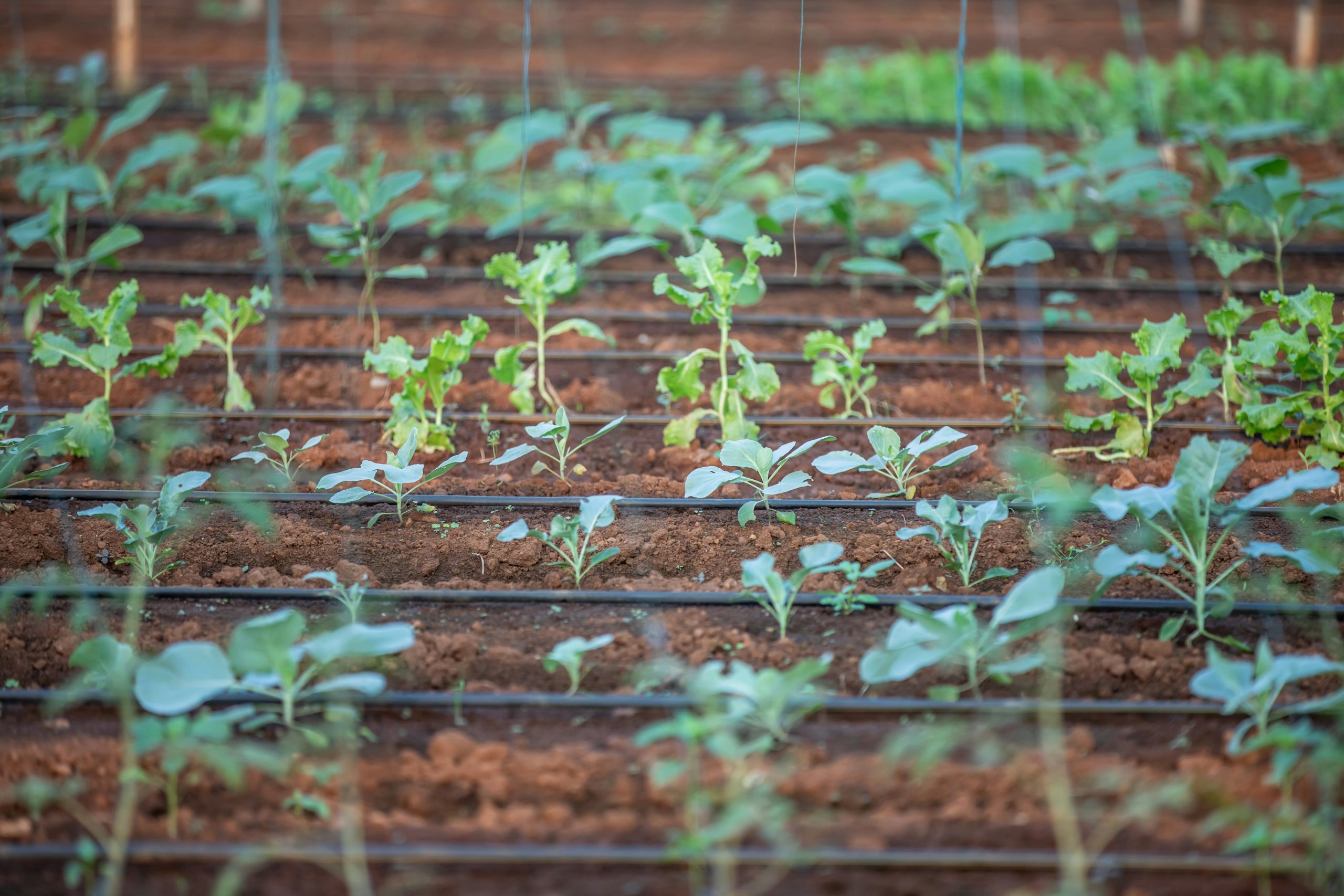
Most Zambian farmers know the sinking feeling of a dry spell in January or February, just when the maize is tasselling and the rain stops. Irrigation answers that problem and also opens the dry season for a second or third crop. Yet a pump, pipes and drip lines cost real money, and many farmers have bought equipment that later sat idle because the numbers never worked. This article gives you a simple way to check the numbers before you spend a ngwee.
The short answer
Irrigation equipment makes economic sense when the extra income it brings in each year is clearly bigger than the extra costs, and when that gap pays back the equipment within a few seasons. Three things decide this more than anything else. They are the crop you grow, the cost of running the pump, and whether a buyer is waiting for your harvest.
Start with what a cubic metre of water earns
One cubic metre of water is 1,000 litres, roughly five drums. A hectare of maize in the dry season needs somewhere between 5,000 and 7,000 cubic metres over the season. Let us use 6,000 as a round figure. One hectare is four lima.
The Food Reserve Agency announced a floor price of K347 for a 50 kg bag of Grade A white maize for the 2026 marketing season. If your irrigated hectare gives 100 bags (5 tonnes), that is K34,700. Spread over 6,000 cubic metres, each cubic metre of water earns you about K5.80.
Now take a vegetable crop as an illustration. If one hectare of tomatoes gives 20 tonnes and you sell at K5 per kilogram, that is K100,000. Over the same 6,000 cubic metres, each cubic metre earns about K17. Please replace these figures with the yields and prices you actually get in your area, because tomato and onion prices swing a lot through the year. The point of the exercise is to see how much the choice of crop changes what your water is worth.
Work out the running cost honestly
Fuel is the cost that surprises people. The Energy Regulation Board set diesel at K34.45 per litre for November 2026. In September it was K26.86, so the price climbed by more than K7 in two months after the fuel tax relief ended and the kwacha weakened.
A small two inch pump on a short lift often burns about one litre an hour and delivers around 20 cubic metres an hour, though your own pump and lift will differ. At that rate, 6,000 cubic metres takes 300 hours and about 300 litres of diesel. That is roughly K10,300 per hectare per season.
For dry season maize sold at the FRA price, K10,300 of fuel takes about 30 percent of the K34,700 income before you have paid for seed, fertiliser, chemicals and labour. The margin is thin and one more fuel increase can erase it. For the tomato illustration, the same fuel is about 10 percent of income, which leaves room to cope with a price shock.
Also count the pump attendant’s time, repairs, fuel transport and the days the pump breaks down at the wrong moment.
What the equipment costs
Costs range widely, so get written quotations. Some guides to give you a feel for the range.
- A portable diesel or petrol pump for a small plot has been quoted by Kukula Solar at between US$205 and US$500 in Eastern Province. At current exchange rates that is roughly K4,000 to K10,000, before pipes and fittings.
- A fully built community solar drip scheme costs far more. The SCRALA project reported US$179,000 for a 20 hectare solar powered drip scheme at Tauya in Chirundu, which works out to roughly US$9,000 per hectare including boreholes, tanks, panels and drip lines.
- A solar irrigation system handed over to Chipata Trades Training Institute was valued at US$40,770, about K786,845.
The lesson is that a small pump on a small plot can pay back in one or two seasons, while a full drip and solar setup needs a high value crop and a reliable market to pay back.
Diesel, solar or grid power
A solar pump has no fuel bill, which matters more every time the pump price goes up. It costs more to buy, so the question to ask is how many seasons of saved fuel it takes to cover the extra price.
For example, if a solar set costs K30,000 more than a diesel pump and saves K10,000 of fuel per hectare each season, a farmer irrigating one hectare twice a year recovers the extra cost in 1.5 years. A farmer who irrigates only once a year on half a hectare would wait six years, and that may be longer than the pump lasts. Use your own figures in this sum.
Grid power through ZESCO can be the cheapest way to run a pump, but only when the line is close. Ask ZESCO for a written quotation on connection and transformer costs before you decide, because a long distance from the line can add a large amount to the bill.
Kukula Solar reports a Katete farmer who moved from one crop season a year to three after getting a portable solar pump, because diesel for dry season watering had been out of reach. That story shows what is possible when fuel is the thing standing in the way.
Check the water before you buy the pump
A pump with no water is an expensive ornament. Before spending, confirm the following.
- Your river, dambo, dam or borehole still gives enough water in September and October when it is lowest. Ask neighbours how it behaved in the last drought.
- Your borehole yield has been tested, so you know how many cubic metres per hour it can supply without running dry.
- You have checked with the Water Resources Management Authority whether you need a permit for the amount of water you plan to draw.
Think about the size of your land
The smaller the plot, the harder it is to justify owning equipment alone. A few lima may be better served by sharing a pump with two or three neighbours, hiring a pump by the day, or joining a cooperative that buys one set and uses it in turns. Shared ownership works best when the group agrees early on who pays for fuel, who repairs the pump and who gets water first.
Line up the buyer and the timing
Irrigation lets you harvest when most farmers have nothing to sell, and that is where much of the extra money comes from. Dry season maize, onions, tomatoes, leafy vegetables and beans often fetch better prices from July to November when supplies are short. Before you plant, speak to your buyer, whether it is a market trader, a supermarket supplier, a processor or a feed mill. If every farmer on your river plants tomatoes in the same month, the price will fall just when your crop is ready.
Be careful with borrowing
Loans for irrigation equipment can help, since many farmers lack the cash upfront. Pay-as-you-go solar pump schemes and asset-based loans from microfinance lenders exist in Zambia. Check the total you will repay, the interest and the repayment dates. Loan repayments should be timed after your harvest income arrives, and your expected extra profit should be clearly bigger than the instalments. A loan taken for equipment you cannot use year after year becomes a heavy burden.
Warning signs that it will not pay
- You have no buyer, or you plan to sell at the same time as everybody else.• Your water source dries up before the crop is ready.
- The only crop you plan to irrigate is maize on a small plot sold at the floor price, and you will rely on diesel.
- You are borrowing at high interest and cannot show how repayments will be covered.
- Nobody on the farm knows how to maintain the pump and the nearest repair shop is far away.
Questions to answer before you buy
- What crop will I grow, what yield can I realistically get, and what price will I be paid?
- How many cubic metres of water does that crop need on my land, and does my source supply it in the driest month?
- What will fuel, labour and repairs cost me each season at today’s prices, and what if diesel rises by another K5 a litre?
- What is the full price of the system including pipes, fittings, tanks, installation and transport?
- How many seasons will it take for the extra profit to repay the cost?
- Who will repair it and how quickly?
If you can answer all six with real numbers from your own farm and the answers look good, irrigation is likely to be a sound investment. If you cannot answer them yet, spend a season gathering the figures first. That is cheaper than buying the wrong equipment.
Figures in this article are illustrations to help you do your own sums. Prices for fuel, equipment and crops change often, so please confirm current quotations from suppliers and buyers before you decide.