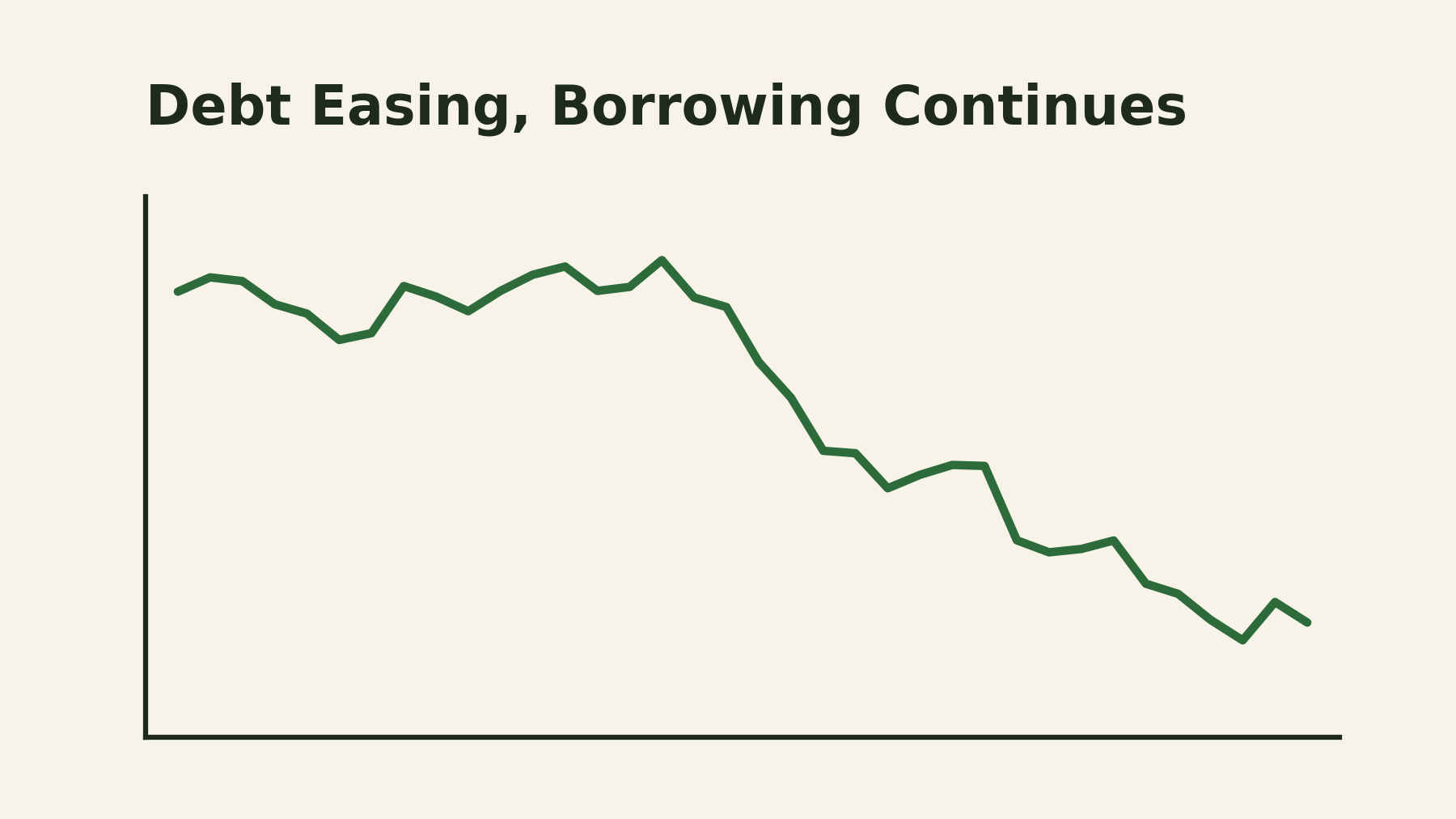
On 12 October 2026, President Hakainde Hichilema welcomed a Moody’s Ratings projection that Zambia will record one of the largest reductions in government debt in sub-Saharan Africa. Finance Minister Situmbeko Musokotwane is in Bangkok for the IMF and World Bank meetings, running from 12 to 18 October. Zambia is seeking financing for roads, electricity, border facilities and the Kazungula Bridge corridor. For agriculture, the significance lies in how investment in these areas could address some of the structural constraints facing producers and agribusinesses.
What has been agreed so far
On 9 October, Zambia reached a staff-level agreement with the IMF on a 36-month Extended Credit Facility of about US$1.47 billion. It still needs approval from IMF management and the Executive Board, so no money has been paid out. It is a general economic programme and does not set aside funds for farming. The Lobito Corridor meeting in Lusaka on 5 to 6 October, with Angola and the DRC, points to better regional trade, but no project funding has been confirmed.
Why it matters to farming
The 2026 budget gave K15.5 billion to agriculture, fisheries and livestock. That includes K9.2 billion for FISP and K2.1 billion for strategic food reserves. Debt servicing took K73.7 billion, made up of K52.0 billion for domestic interest and K21.7 billion for external debt payments. That is nearly five times the agriculture allocation. If that pressure eases, government has more room for feeder roads, irrigation, research and extension.
How the debt news can help farmers
More fiscal room could support agriculture
Lower debt-servicing pressures could eventually give the government more room to invest in irrigation, rural roads, agricultural research and farming support programmes. Better roads can reduce transport costs, while irrigation can help farmers manage unreliable rainfall and extend production seasons.
However, the government says debt servicing remains expensive, meaning additional agricultural spending will depend on future budget decisions.
Investment could improve market access
At the Bangkok meetings, Zambia is seeking development financing and private investment in infrastructure, energy and trade. These investments could benefit agriculture through more reliable electricity, better transport networks, storage facilities and food-processing capacity.
Zambia is also pursuing regional connectivity through the Lobito Corridor, which aims to strengthen transport and trade links between Zambia, Angola and the Democratic Republic of Congo. Improved connections could give agricultural producers and processors access to wider markets, provided transport costs fall and supporting infrastructure is delivered.
These are potential benefits. Investment discussions do not guarantee that projects will receive funding or that farmers will benefit immediately.
What about fertiliser prices and maize prices?
Debt reduction alone will not make fertiliser cheaper or raise the prices farmers receive for maize. Input costs depend on factors such as exchange rates, international prices and transport expenses. Maize prices depend on market demand, production levels, trade policies and government purchasing arrangements.
Farmers should therefore watch actual changes in input prices, FRA purchasing prices, payment timelines and access to agricultural credit.
What to watch
Agriculture’s share in the next budget
- Fertiliser and seed prices compared with farm-gate prices
- Roads and storage built in farming areas
- Whether farmers can get affordable credit
Bottom line
Zambia’s improving debt outlook could support agricultural growth by creating room for productive investment and attracting private capital. The real benefit for farmers will depend on whether these opportunities translate into lower production and transport costs, better market access and higher net farm income.