Farming attracts people for good reasons. It offers income, independence, and the chance to build something long term. It is also one of the easiest businesses to enter without a plan, and one of the hardest to succeed in without good management.
Most beginner farmers do not fail from lack of effort. They fail from making decisions without enough information. Here are the mistakes that show up most often, and what to do instead.
Starting Without a Plan
Many beginners plant first and figure things out later. A farm needs a plan before production starts. That means knowing what you will produce, what it will cost, who will buy it, and what income you can realistically expect. Without this, farmers spend money on inputs with no idea whether the harvest will be profitable.
Copying What Other Farmers Grow
Watching a neighbour succeed with a crop is tempting to copy. But every farm sits on different soil, gets different rainfall, has different access to water, and faces a different market. What works for one farmer will not automatically work for you. Base your crop choice on your own land and your own buyers, not on what is popular.
Chasing Yield Instead of Profit
A big harvest feels like success, but yield is not the same as profit. A farmer can grow a bumper crop and still lose money if input costs were too high or the selling price too low. Track both sides. Production tells you what you grew. Profitability tells you what you earned.
Underestimating Costs
Seed and fertiliser are the obvious costs. Labour, transport, storage, packaging, and marketing are the ones that catch beginners off guard. Budget for all of them from the start, or unexpected expenses will quietly eat your margin.
Skipping Records
Some farmers only think about records when they need a loan or grant. In reality, records are one of the most useful tools you have. Knowing what you spent, what you produced, and what you earned tells you what is working and what is not. Without that, you repeat the same mistakes every season.
Ignoring the Market Until Harvest
Growing a crop is half the job. Selling it is the other half. Ask before you plant, not after. Who will buy this, and at what price. That question alone will shape better decisions about what to grow, how much, and when.
Expanding Too Fast
Growth is the goal, but expanding before you understand your costs and your systems turns a small mistake into a big one. It is usually better to get one hectare running efficiently before you plant three.
Treating Farming as a Hobby, Not a Business
Loving the land is a good start. It is not a business plan. A profitable farm needs planning, financial discipline, and records, alongside the farming knowledge itself.
The Fix Starts With Better Decisions
Every farmer makes mistakes, especially in the first few seasons. The ones who succeed are the ones who catch these mistakes early and build a system that avoids repeating them.
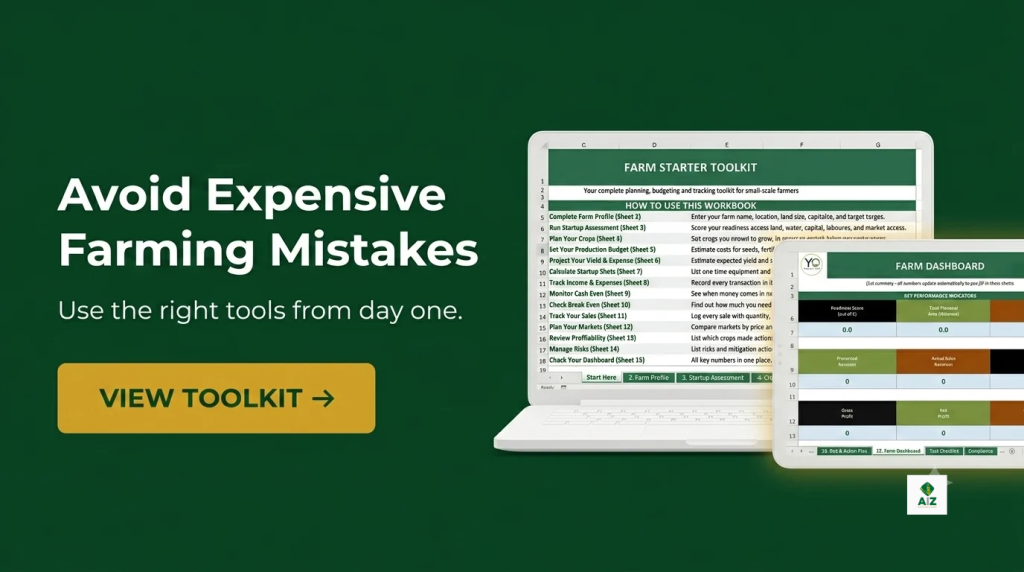
That is exactly what the Farm Business Starter Toolkit is built for. It gives you the planning templates, budget tools, and record-keeping structure to make these decisions before you plant, not after.
1 thought on “Common Mistakes Beginner Farmers Make and How to Avoid Them”