
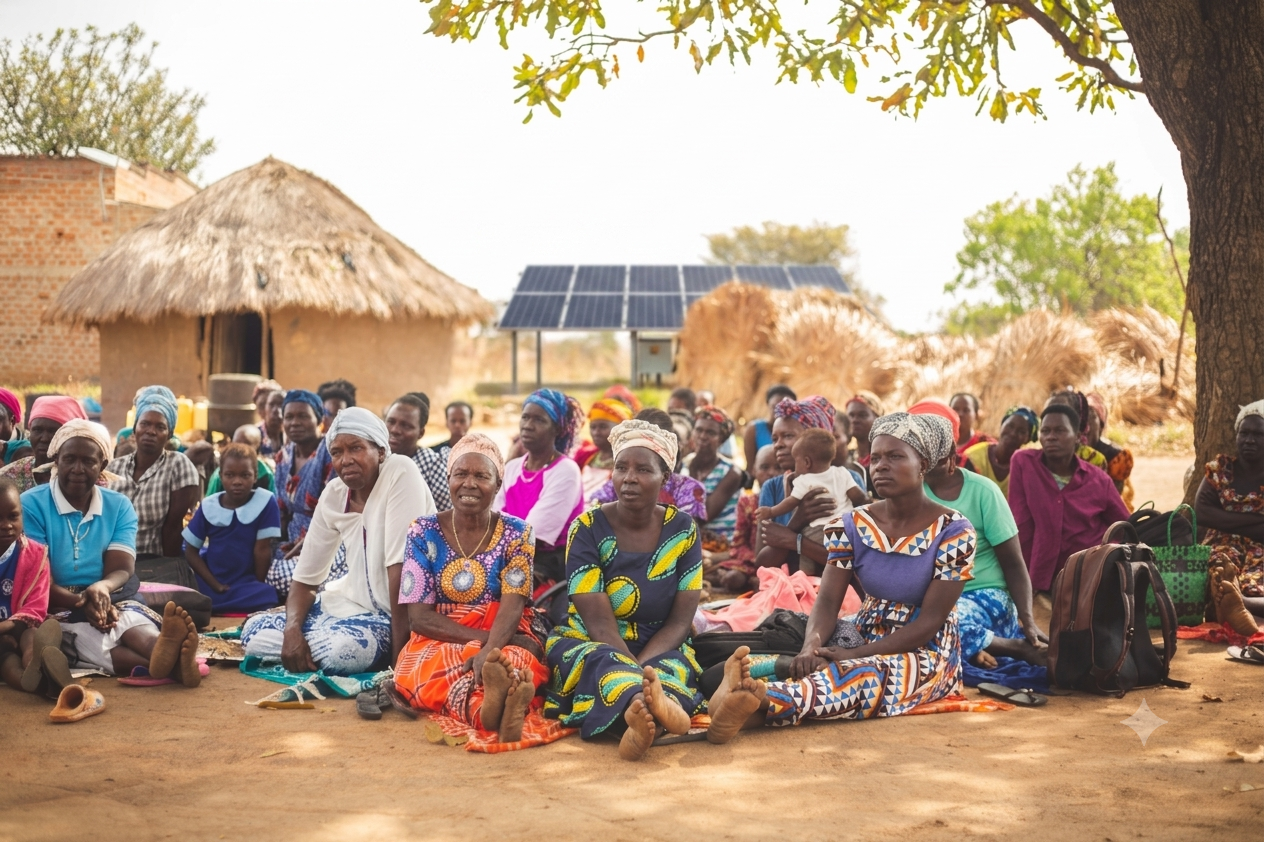
Most rural entrepreneurs wait for electricity before they plan around it. That is usually the wrong order. The gap between power arriving and demand catching up is where the early money sits.
Zambia is in the early stages of building out mini-grids across rural areas, with a national target of 1,000 mini-grids and universal electricity access by 2030. The Rural Electrification Authority is leading the rollout, and the design is deliberate. Instead of simply wiring up villages and leaving it there, the programme is structured to attract private operators who will build businesses around the power once it arrives. That means the opportunity is not just having lights in your house. It is being the person who already has a plan the day the grid switches on.
Here is where the openings are, and why the early mover in each one tends to keep the advantage.
Milling Services
Grain milling is one of the most consistent income sources a rural entrepreneur can build around electricity. Farmers who currently travel long distances to mill maize, or who sell raw grain at a discount because they cannot process it locally, become a captive customer base the moment reliable power arrives nearby. The equipment cost is the main barrier. Electricity removes the second one, which is the ongoing cost and unreliability of running a diesel-powered mill.
Cold Storage
Vegetable, dairy, fish, and meat producers lose a share of what they grow or raise simply because there is nowhere to keep it cool. A cold room built around mini-grid power turns that loss into a service fee. This is a business that scales with the farming activity already happening around it. It does not require convincing farmers of a new behaviour, only giving them somewhere to take what they already produce.
You might also like: Two ways to build your reputation so your clients can keep coming back
Agro-Processing
Oil presses, peanut processing machines, and feed mixers all turn raw agricultural output into something that sells for more. An entrepreneur who owns this equipment is not competing with farmers, they are buying from them and adding a margin on top. Areas without reliable power have simply not had this option available locally, which means the raw produce leaves the area and the processing margin leaves with it.
Irrigation Services
Not every farmer can afford their own pump and power setup, but many would pay for irrigation on a per-use or subscription basis. An entrepreneur who invests in irrigation equipment and offers it as a service to smaller farmers fills a gap that individual farm economics often cannot justify alone.
Welding and Equipment Repair
Every one of the businesses above depends on equipment that eventually breaks down. A welder or equipment repair service positioned near a mini-grid site has a customer base built in from day one, since farm equipment repair currently often means a long trip to a larger town.
Why REA Is Structuring the Programme This Way
The mini-grid rollout is deliberately built to demonstrate business models that can be replicated at scale, not just to deliver power. Government financing is doing the work of removing the risk in early sites, and the intent is for private operators to see those results and build in the next area without needing the same level of subsidy. In practice, this means the businesses that get established early, close to the first mini-grid sites, are the ones the programme is designed to hold up as proof that the model works. That is a useful position to be in.
The first demonstration site connects close to 4,400 people through 450kW of mini-grid capacity. It is a small start relative to the 1,000 mini-grid target, but it is the model the rest of the rollout is expected to follow. For a rural entrepreneur watching where power reaches next, that is the detail worth tracking, not the launch announcement itself.
Have you tried our free tools? Try them here
Reference: https://www.undp.org/zambia/press-releases/zambia-launches-africa-mini-grids-programme-power-rural-communities-and-build-lasting-energy-market